Loop Lab Busan 2026 · This Is Not Ice Cream
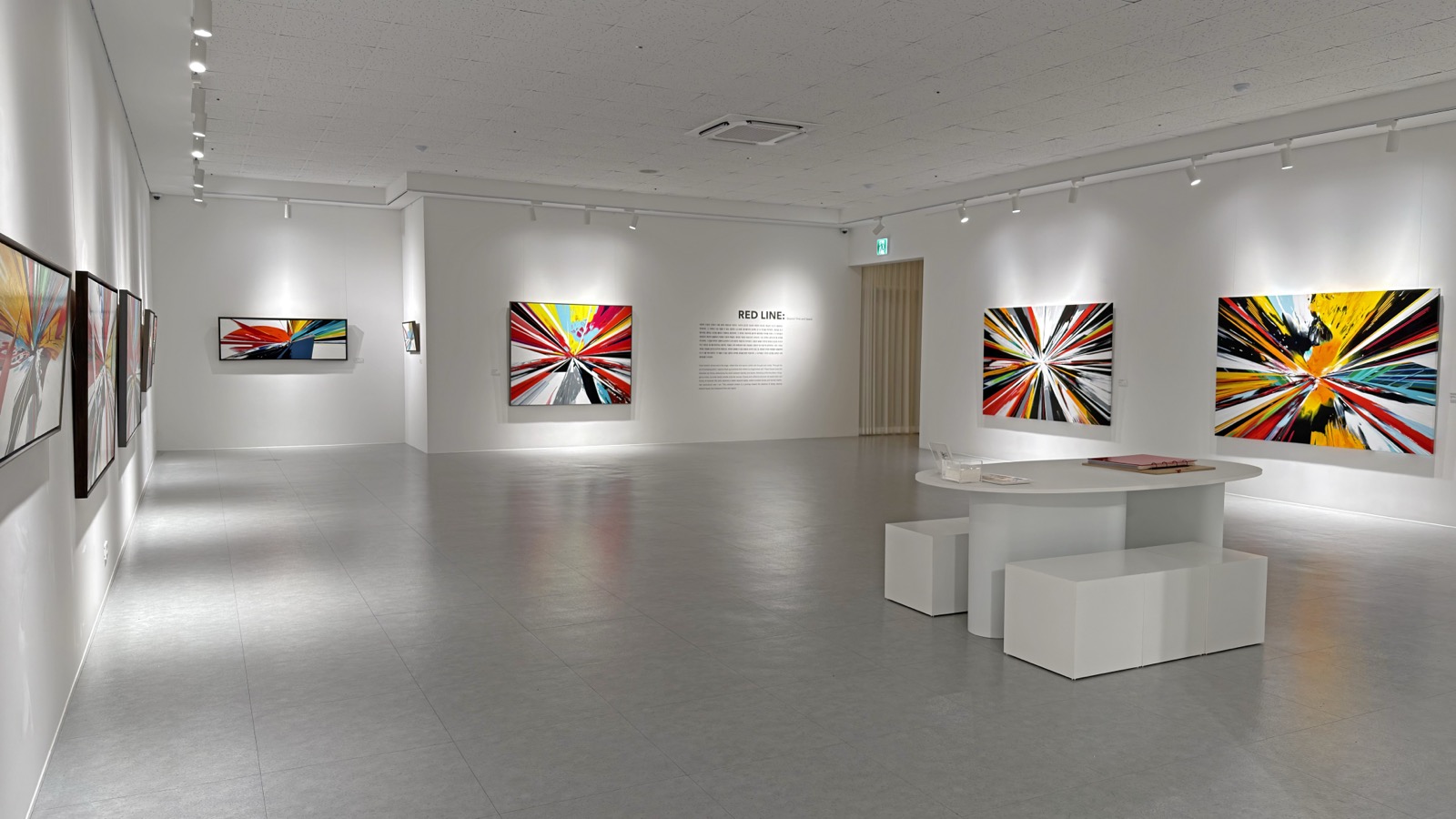
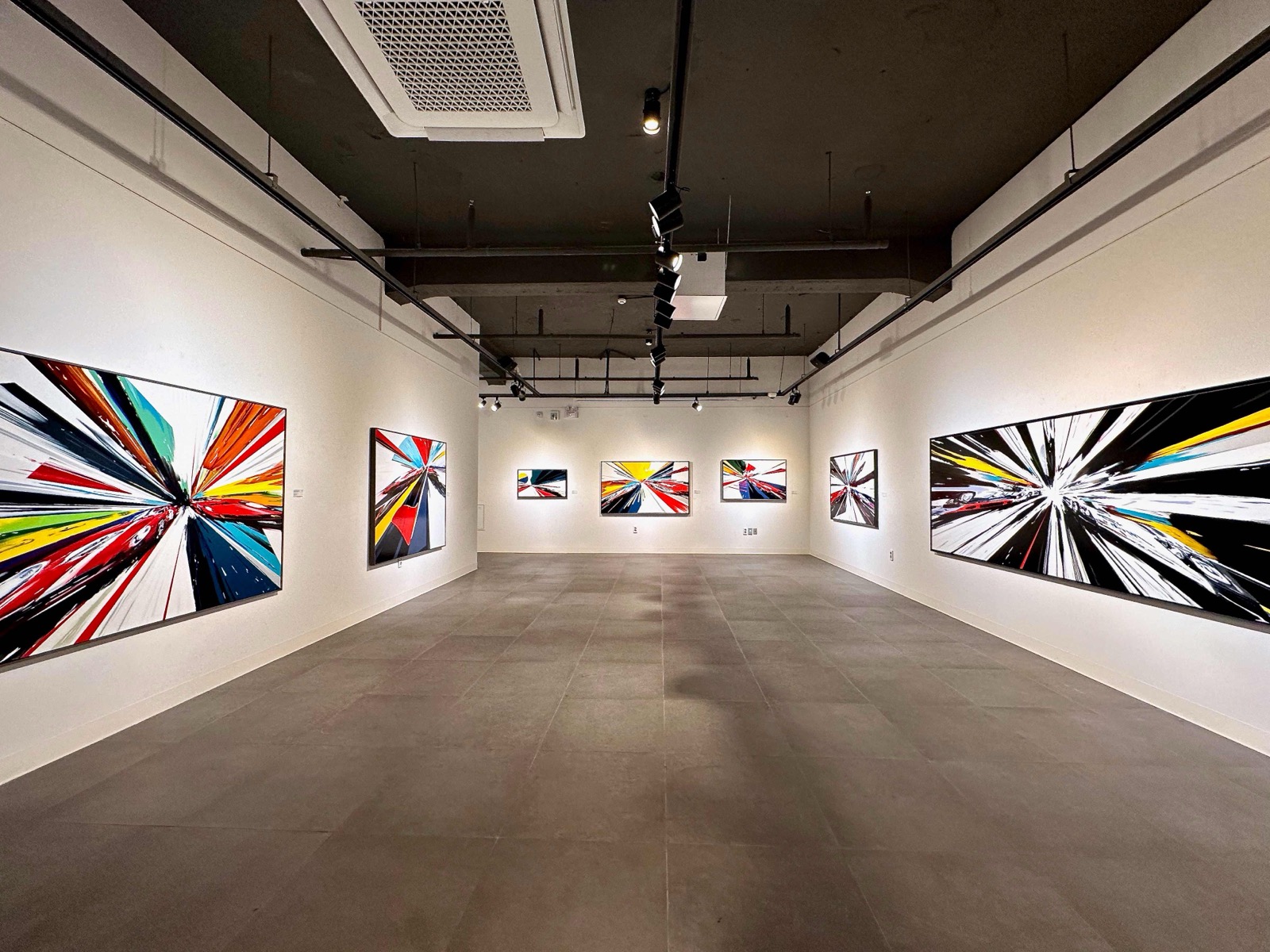
The exhibition, titled Emotions Do Not Stand Still. Memory Is Not Fixed., brings together two artists, Minseok Kang and Park Ja-yong. The entire space entrusted to Kang is composed under a single sentence: "This is not ice cream." The show begins from the premise that emotion and memory do not remain fixed in place but are continually transformed and re-stored according to time, environment, and medium.
Why Ice Cream — What Remains After Painting
To understand Kang's work, one must first see why he came to gather "fragments of paint" and shape them into ice cream. This ice cream is not a choice that borrows a cute or popular image. In his artist's note, Kang says he made ice cream out of leftover paint, describing it not as a playful object but as a condensation of the memories and emotions that have passed through time.
If painting is a process that holds the traces of pain, tension, and collision, then ice cream is another landscape reborn from the fragments left afterward. It is not an image that suddenly appeared outside of painting; it is matter left over from the painting process, reorganized into another form. For Kang, paint is not a simple material but a trace of emotion and time, and once that trace has accumulated, hardened, and remained, it reappears in the familiar figure of ice cream.
Ice cream is sweet but soon melts; it is joyful yet holds within it the moment of vanishing. And so the artist places the vanishing sensation, the joy that cannot be held, and the fragments of time now passed into the figure of ice cream. But his ice cream is not real ice cream. It cannot be eaten, does not melt, has no scent, and is not cold. The essence of the ice cream we know disappears, and only its outward form remains. It is exactly here that the exhibition's central sentence — "this is not ice cream" — arises.
Three Axes of the Space · Perception That Begins at the Door
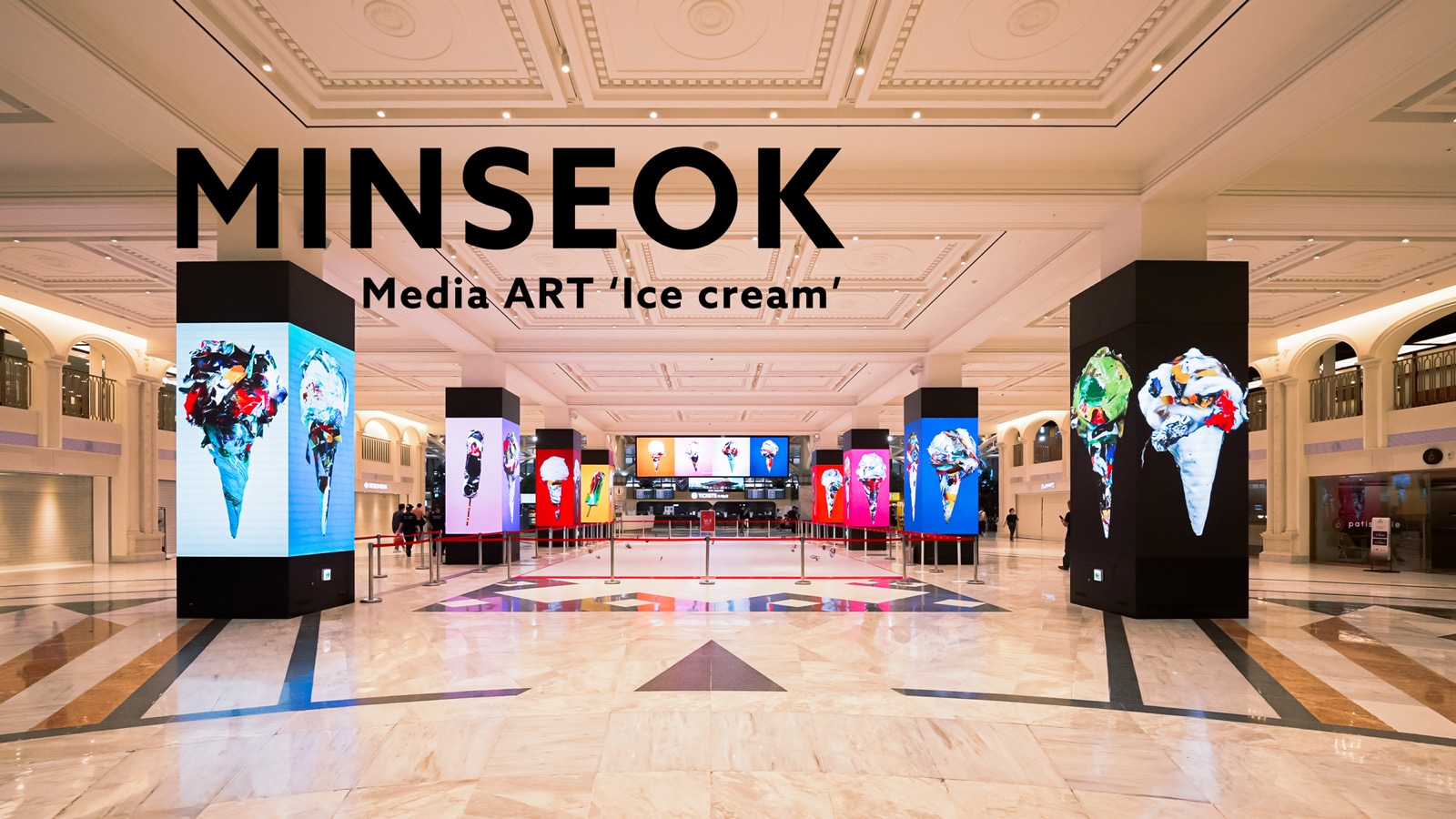
Kang's space begins at the door. Before entering the room, the viewer already meets three structures at once. To the left stands a small computer-based device; to the right, an installation containing an actual sculptural object; and through the door ahead, a room where three fifty-inch televisions stand vertically. This arrangement is not a simple display but a spatial division of the structure of memory the artist works with. A repeating image, an image transformed by the viewer's intervention, and a material structure in which the real appears distorted all become visible at once, before a single room. And so the viewer, rather than understanding one work at a time in sequence, first takes in the whole visual impression and only afterward experiences the differences among the structures.
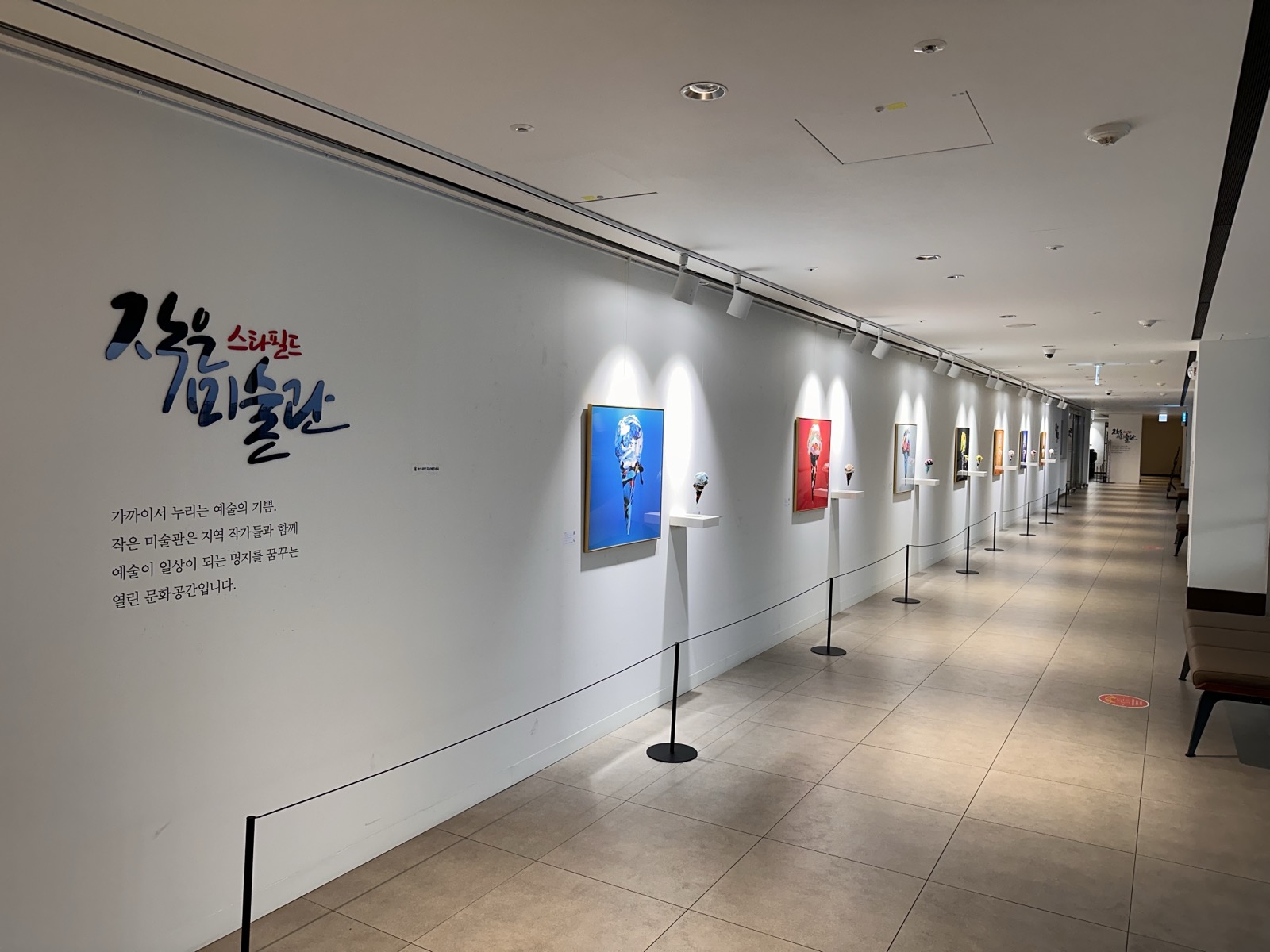
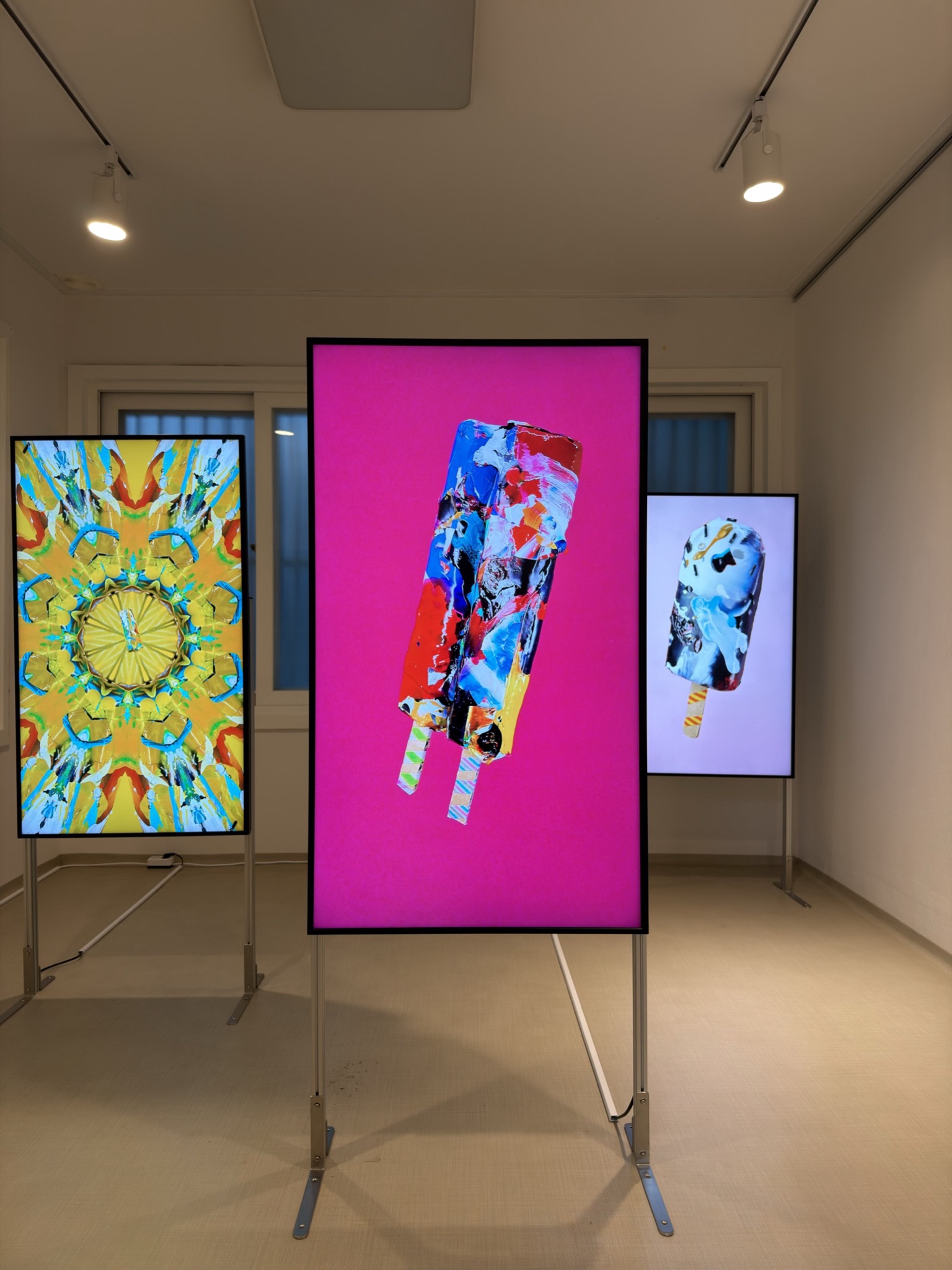
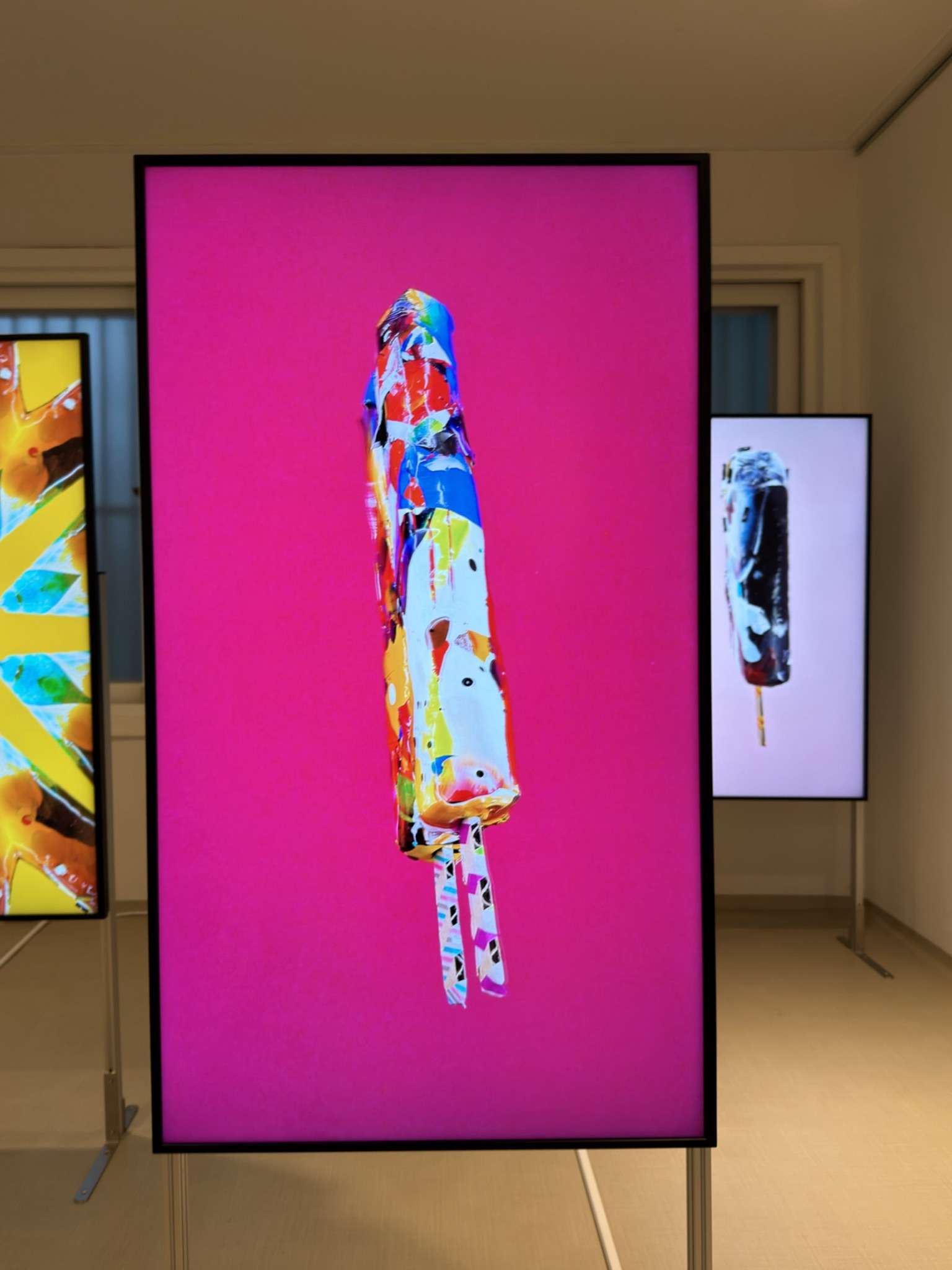
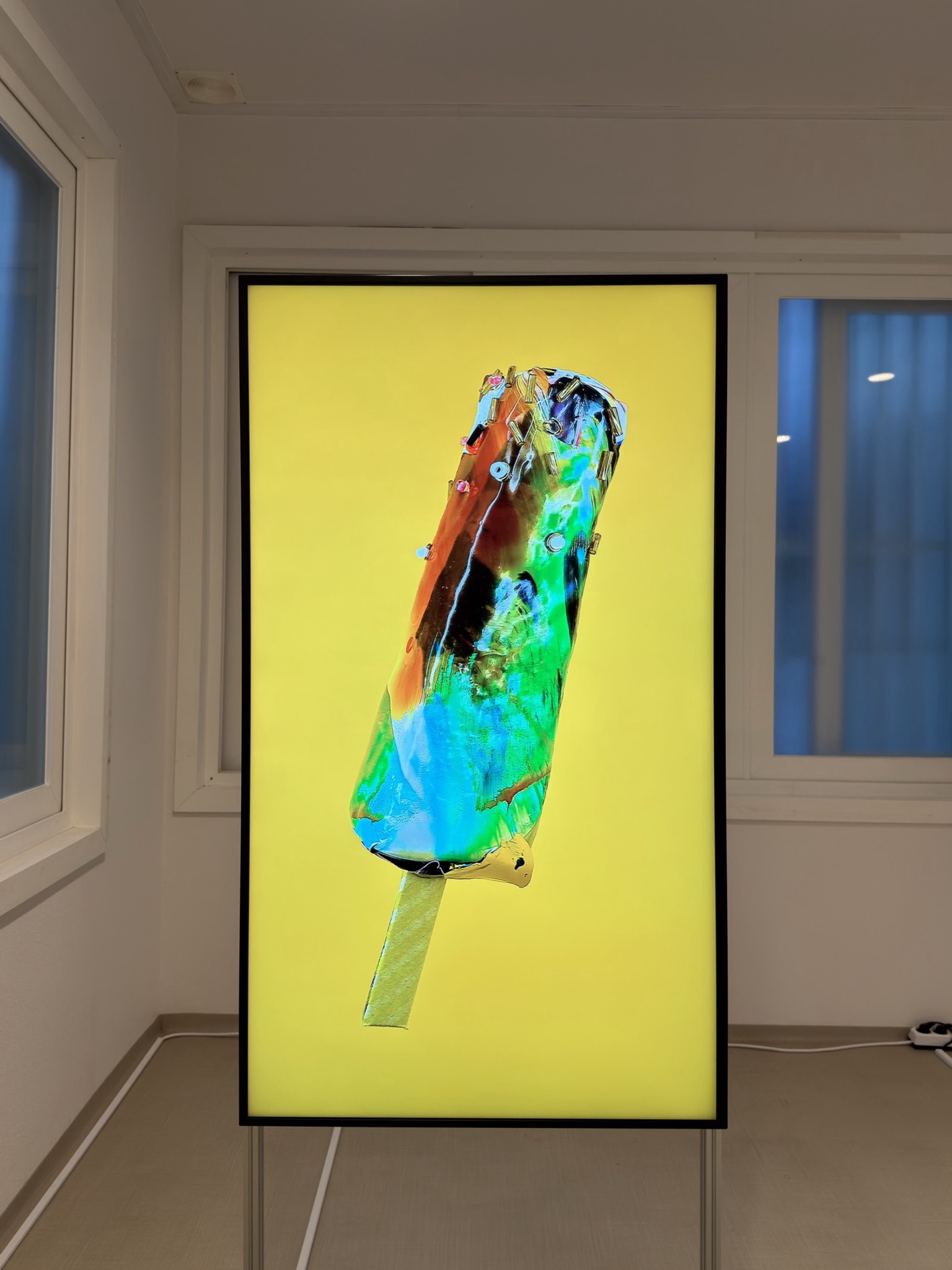
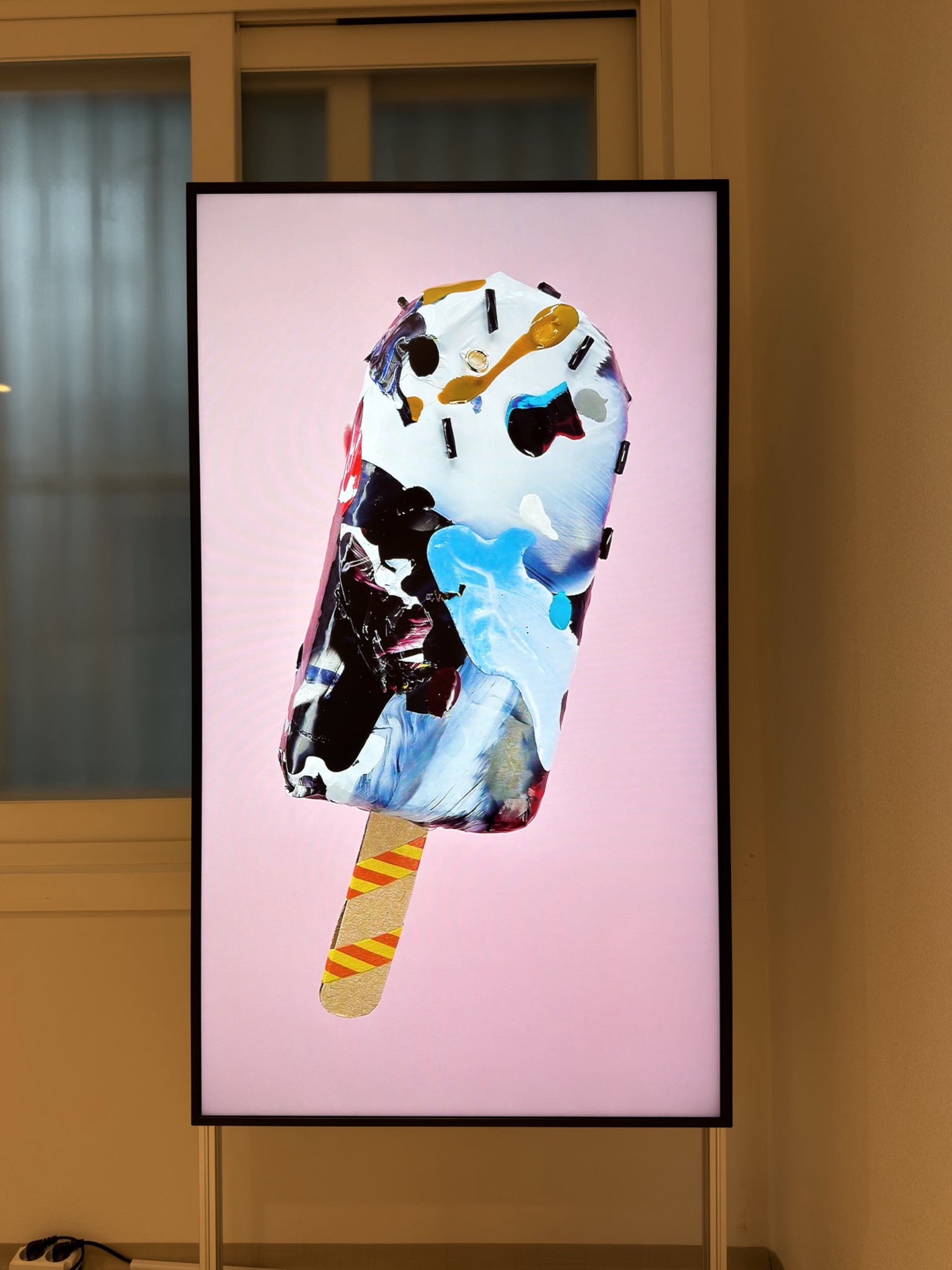
On the three fifty-inch televisions at the center of the room, a single ice-cream video plays on a loop. A form that can be split in two like a twin bar, a bar shape recalling a melon popsicle, a form calling up the crisp sensation of soda — these ice creams imitate popular shapes we already know. What matters is that the videos are not 3D graphics or digital simulations. The artist actually made the sculptures from acrylic paint, hung them in the air inside a small studio, and filmed them rotating. What appears on the screen is not a virtual image but the record of real matter. In the gallery, however, the sound is removed, and the viewer faces it through sight alone.
Titles such as Rich Strawberry & Milky Cream · Sweet Melon Mango Popping · Sparkling Lemon Soda Cool are not names meant to invent new flavors but devices to instantly summon a sensation already lingering in the viewer's mouth and memory. Kang's ice cream is a sculptural object, but at the same time a trigger of memory. It has no real taste, yet it draws out the sensory memory that already exists within the viewer.
Left-Hand Device · Ice Cream Made by Memory
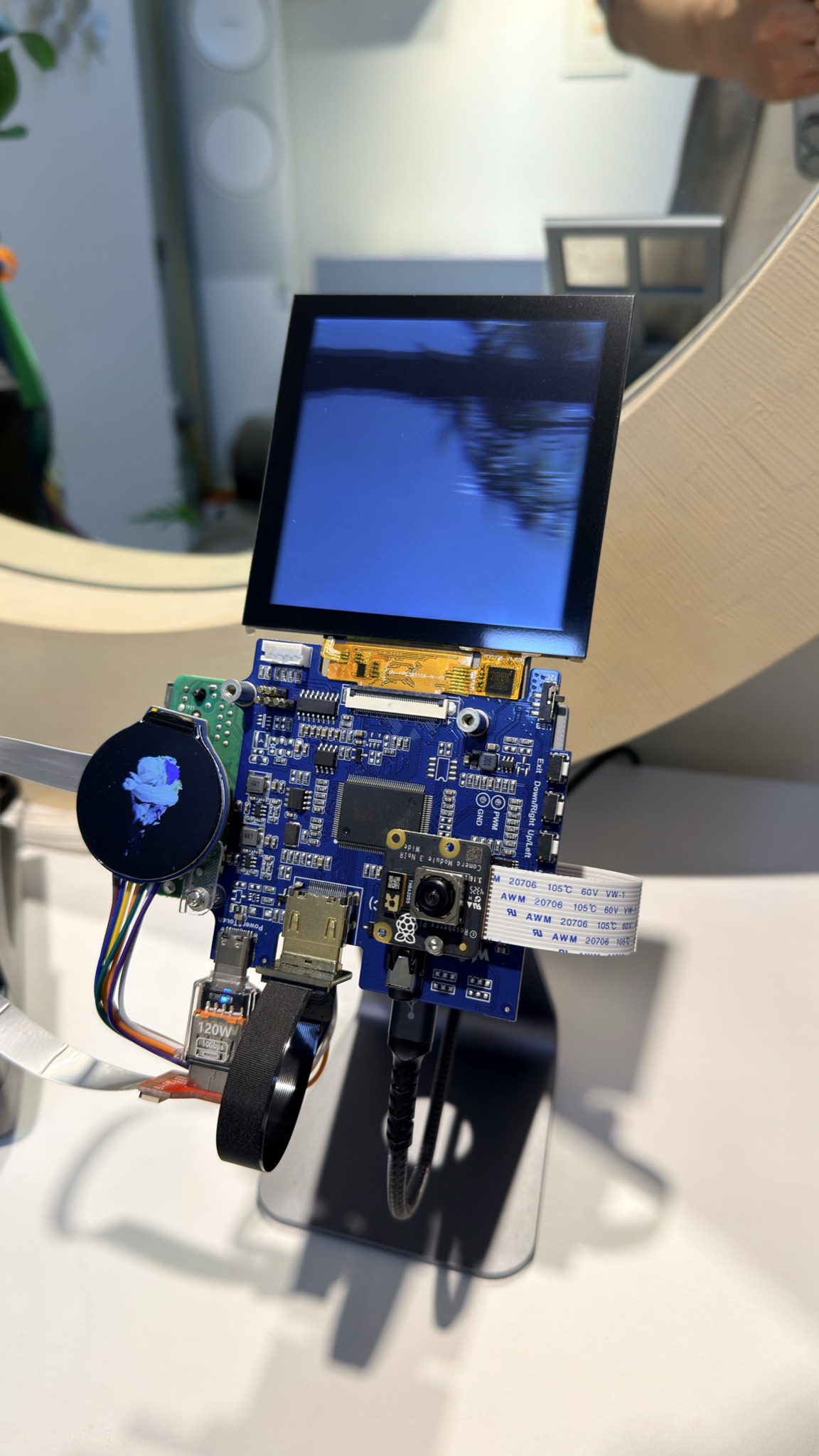
Composed of a Raspberry Pi, a monitor, and a camera, this device begins with everyday footage and several ice-cream images repeating at random. When the viewer makes a hand gesture, the footage blurs as if running backward into the past, turns gray, and is corrupted as its contrast intensifies. At the same time, one of the several ice creams rotating on a small monitor is selected and kept, and then, combining with certain scenes of the reversed footage, a single resulting image is formed.
This device matters because it shows that memory is not the storage of an original as it was, but something newly composed through selecting, erasing, and combining. The artist does not leave the process as a mere interaction effect; through the viewer's intervention, he makes the generative structure of memory operate before one's eyes.
Right-Hand Installation · The Form of Memory Emerges Faintly
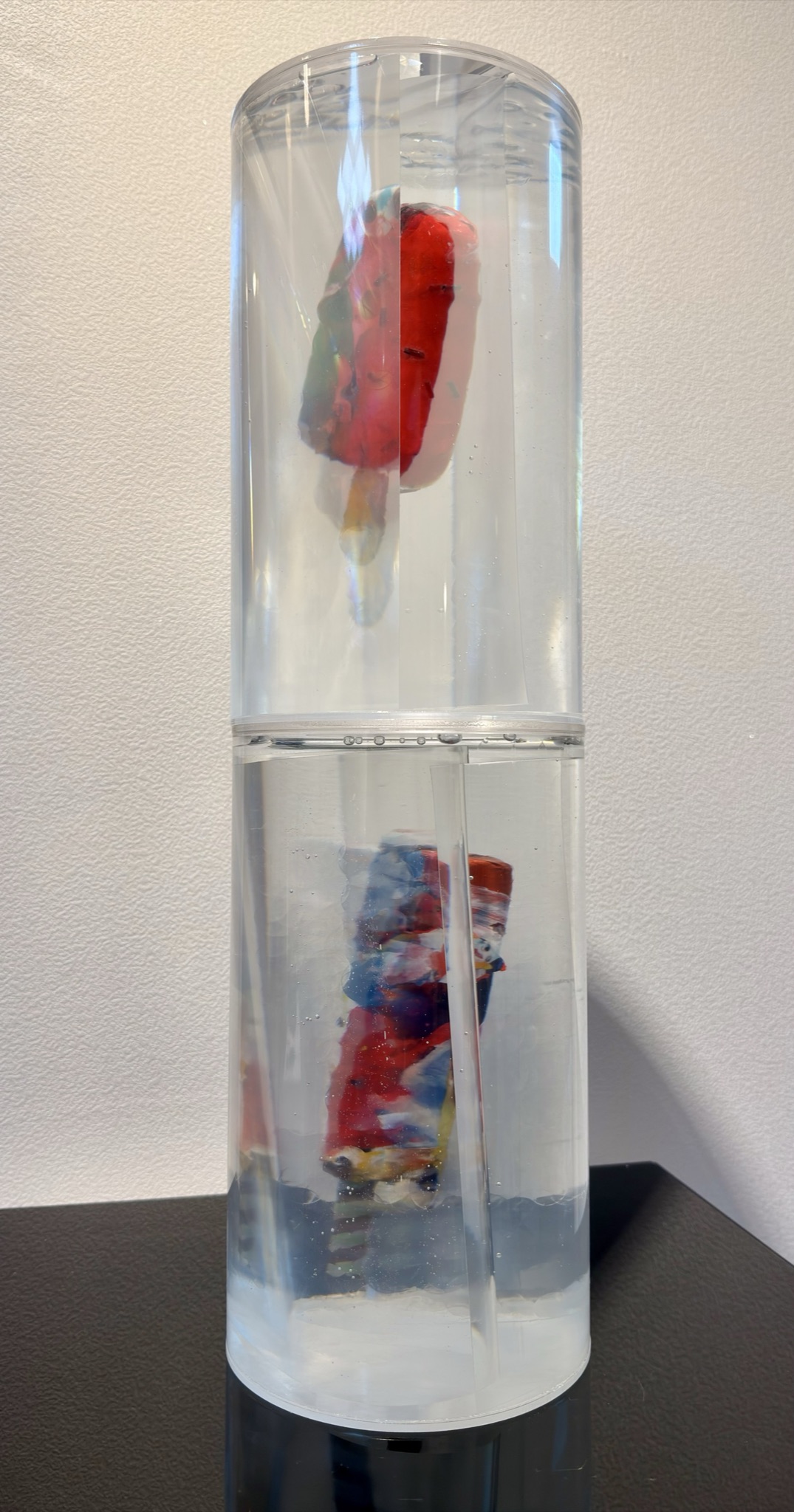
The actual ice-cream sculpture sits at the center of an acrylic tube, seen in a refracted state through a special film and water. The viewer clearly knows the original object exists within, yet what is perceived before the eyes is not that original but a blurred, distorted image. Moreover, the image is not fixed from one direction; it shifts slightly each time the viewer moves around it three hundred sixty degrees. That is, it appears not as a single clear form but as a perpetually variable, wavering perception.
Rather than drawing out and showing the past like a photograph or video, this work sets real matter before the eyes yet makes it impossible to see as it is. And so the installation is less about "seeing memory" than about showing how easily the way we see the real is blurred and transformed. The real exists, but what we grasp is always a hazy, altered state.
A Light Figure, a Heavy Question
What makes this space compelling is that it speaks of heavy matters through a very popular and light figure. Themes such as memory, emotion, perception, imitation, and the real can easily drift into heavy, expository discourse. Yet Kang draws the viewer in through the too-familiar, too-easy form of ice cream. The viewer first approaches with reactions like "it's pretty," "it looks delicious," "what flavor is it," and then, through the titles and structures, their perception is gradually overturned.
It is precisely for this reason that the sentence "this is not ice cream" grows strong. After reassuring the viewer with a familiar figure, it reveals that the figure is not the real but a structure of imitation, distorted and hardened like memory. This title is a sentence that explains Kang's entire space, and one that lingers long after the viewer has left.
In sum, Kang's This Is Not Ice Cream is not a light exhibition using ice cream as its subject. It is an exhibition in which fragments of paint left from the painting process turn into sculpture, and that sculpture expands again into video, device, and installation — showing how emotion and memory take form and how they blur once more.
Exhibition Details
Title: Emotions Do Not Stand Still. Memory Is Not Fixed. Minseok Kang's Space: This Is Not Ice Cream Participating Artists: Minseok Kang, Park Ja-yong Dates: April 21 – May 2, 2026 (closed Sundays and Mondays) Hours: 1:00 – 5:00 PM Venue: ARTLAB, 61-4 Mangmi-beonyeong-ro 63beon-gil, Suyeong-gu, Busan, 1F Program: Loop Lab Busan 2026